

Why Canada Is Never on One Code Edition
May 7, 2026 · 4 min read · Reviewed September 2026
Applies to All Canadian jurisdictions. Which edition governs your project, and what has been amended, is set provincially.
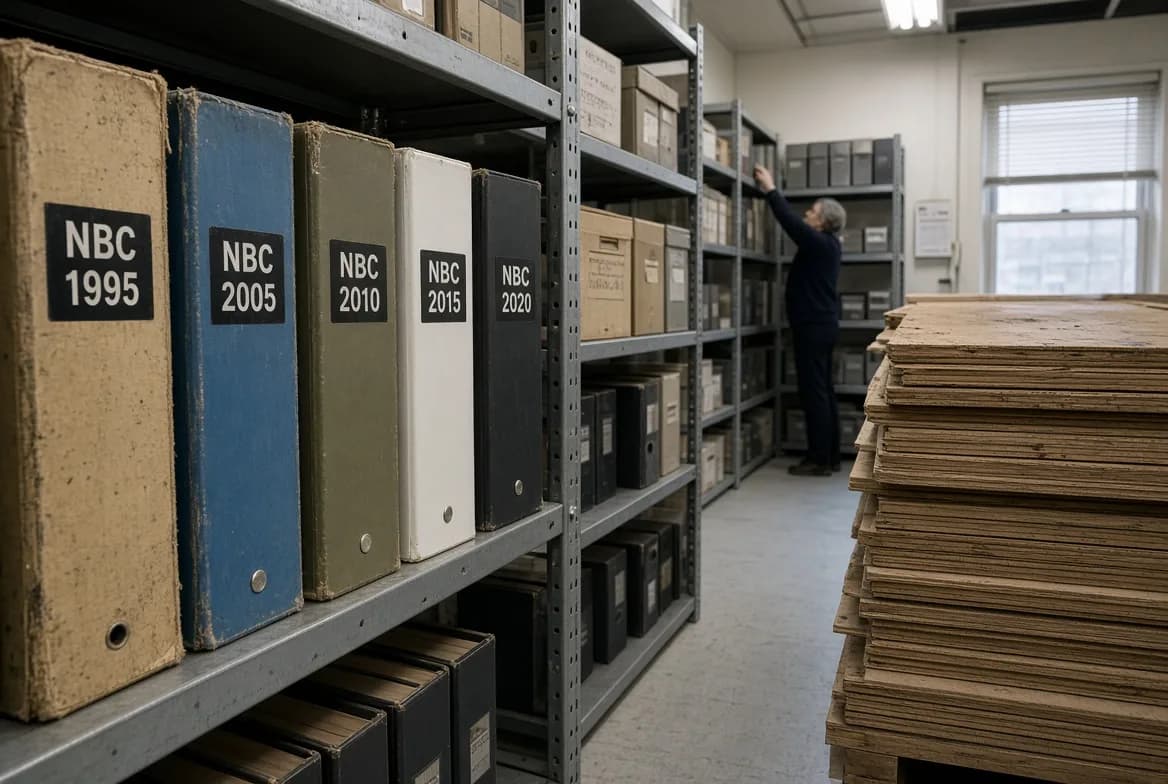
The model codes are developed nationally and published on a cycle. They are not law when they are published. Each province and territory decides whether to adopt an edition, when, and what to change about it.
That gap between publication and adoption is where the spread comes from. A province may adopt within a year, or take four, and by the time the slower ones catch up the next model edition is already out.
Why the gap exists#
Adoption is legislative work. It takes drafting, consultation, and a decision about which amendments to carry forward from the previous edition. Provinces with a large body of existing amendments have more of that work to do, so they tend to move more slowly.
There is also an industry consideration. A new edition changes what builders, designers and inspectors have to know, and provinces generally build in lead time so the trades and the departments are ready before the date arrives.
| Stage | Who does it | Typical effect |
|---|---|---|
| Model code published | National body | No legal force anywhere yet |
| Province reviews | Provincial ministry | Decides what to amend |
| Regulation drafted | Provincial government | The version that becomes law |
| Effective date set | Provincial government | Often a year or more out |
| Transition window | Provincial rules | Either edition may apply |
| Municipal layer | Local government | Bylaws and local requirements on top |
The last row is the one people forget. Even inside a single province, a municipality can add requirements through its own bylaws, and those sit on top of whichever edition the province has adopted.
Energy requirements are the clearest case. Several municipalities have set their own targets ahead of what the province requires, so two houses a short drive apart, under the same provincial code edition, can face different insulation and airtightness numbers. Neither the model code nor the provincial regulation will tell you that; the municipality will.
Working with the spread#
Establish the edition per project, not per firm
If you work in more than one province, the answer changes with the address, and sometimes with the permit date.
Read the provincial version, not the model
The model code is the base document. The provincial regulation is what you have to satisfy.
Watch for effective dates
They are published in advance. Projects near a changeover need to know which edition their application will land under.
Check the municipal layer separately
Local bylaws add requirements the provincial code says nothing about, and they are not in the code book.
Keep a note of what governed each project
Edition, amendments and permit date. It matters years later when someone asks why something was built the way it was.
For anyone working nationally, the spread is a standing condition rather than a temporary problem. It has been this way since the model code system began, and the harmonisation efforts that come along periodically have narrowed the gap without closing it.
The habit that makes it manageable is treating the code edition as a project fact, recorded alongside the address and the permit number. Firms that carry knowledge between provinces without checking that fact are the ones that submit drawings detailed to the wrong requirement, and find out about it in review.
Common questions#
- Which edition applies to my project?
- The one adopted by your province, as it stood on the date that governs your permit. Ask the department if the timing is close to a changeover.
- Can I use a newer edition voluntarily?
- Generally you can build better than the code requires, but you still have to demonstrate compliance with the edition in force. Newer requirements do not automatically satisfy older ones, and a plans examiner will review against the adopted edition regardless of what you built to.
- Where do I find the amendments?
- They are published by the province, sometimes as a separate document and sometimes integrated into the provincial edition. The provincial ministry is the source, and it is the version to work from rather than a summary published by anyone else.
- Do the territories follow the model codes?
- Broadly, and each sets its own adoption on its own schedule. Climatic and geographic conditions there also drive requirements the southern provinces do not have, particularly around permafrost, snow and heating.
- Why not have one national code?
- Building regulation is a provincial responsibility under the constitution. The model codes exist to give the provinces a common starting point rather than to override that.
- How far behind can a province be?
- It varies, and gaps of several years are normal. That is why the edition in force somewhere else is not a reliable guide to what applies where you are building, even when the two provinces share a border.
Confirm the edition and effective date adopted in your municipality — provinces and territories adopt on their own schedule.
Related notes
Ask your own code question
Canadian Codes answers questions like this one from national, provincial, territorial, and municipal sources, and cites the document, section, and page so you can check it yourself.
Try it free →