

Approved Is Not the Same as Compliant
May 15, 2025 · 4 min read · Reviewed September 2026
Applies to Permitted work across Canada. How responsibility is allocated between owner, designer, builder and municipality is set by provincial legislation.
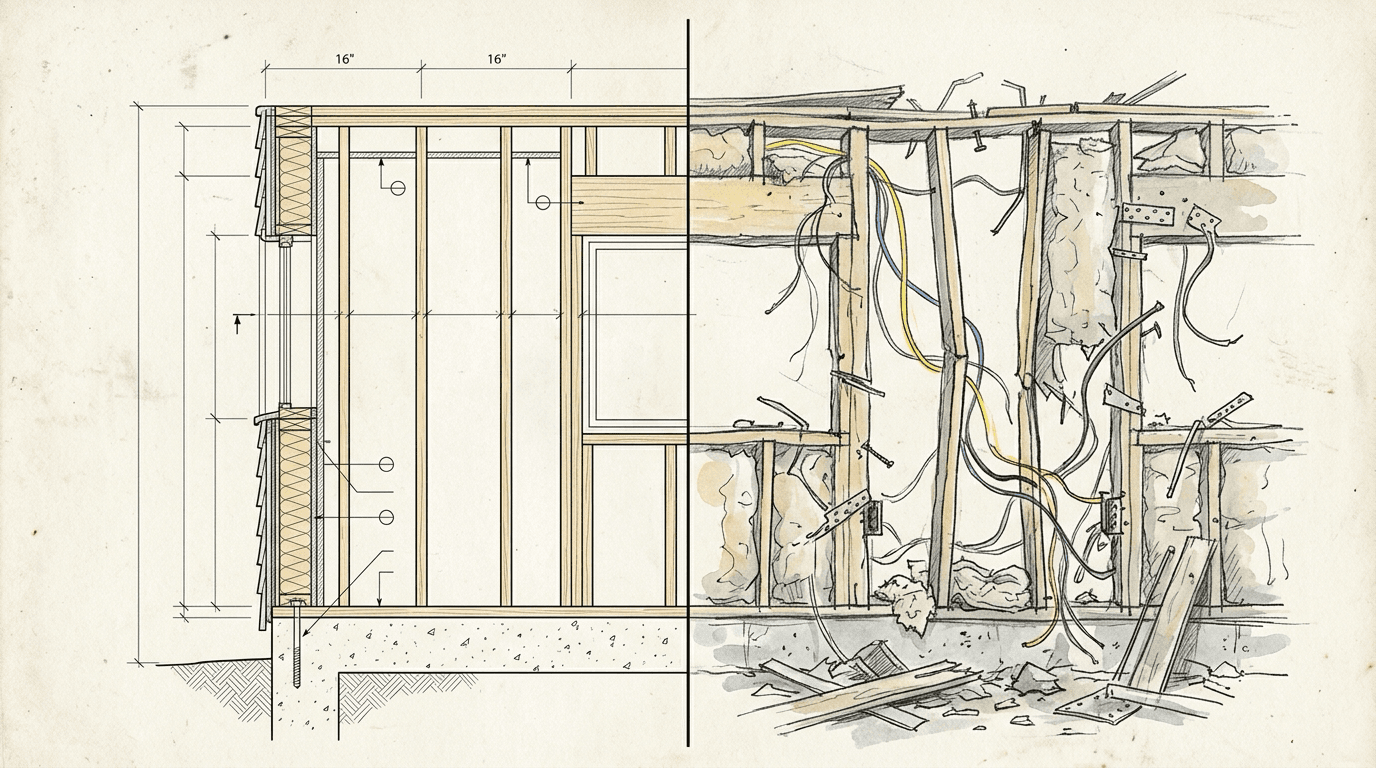
People treat an approved permit as a certificate that the project meets the code. It is closer to a licence to proceed: a reviewer looked at the application, found nothing that prevented issuing it, and issued it.
The gap between those two readings is where arguments start. An error missed at review does not become compliant because it was missed, and finding it later is an expensive discovery.
Who is responsible for what#
Provincial legislation generally places the obligation to comply on the owner, and building department review is expressly not a warranty. That is why an error found later lands on the project rather than on the reviewer, however unsatisfying that feels.
It also explains the limits of what a plans examiner does. They check a submission against the code within a queue and a time budget. They are not re-designing the building, and they are relying on what the drawings tell them.
Where the gaps appear#
| Gap | How it happens | Who finds it |
|---|---|---|
| Error missed at review | Reviewer did not catch a non-compliant detail | A later inspector, or nobody until a problem |
| Drawings incomplete | A condition never shown, so never assessed | On site, when it is built |
| Built differently from approved | Field changes never sent back for review | Inspection, or at final |
| Approved with conditions | Permit issued subject to items being resolved | The conditions sit unread in the permit |
| Deferred items | Some designs submitted later as shop drawings | Whoever chases them |
| Inspection is a sample | Not everything is looked at on a visit | Later, if at all |
The middle row is the most common. Something changes on site for good reason, the change is sensible, and nobody sends it back through the department. The building now differs from the approved drawings, and the permit approval covers the drawings.
What to do about it#
None of this means the permit process is not worth having. A second set of qualified eyes on a design catches real problems, and the inspection record is genuinely valuable later. It means the permit is one layer of protection rather than the whole of it.
It also explains why buyers and insurers ask for the inspection history rather than only the permit. The record of what was checked and when is more informative than the fact that an application was once approved.
For anyone commissioning work, the practical version of all this is simple: the permit protects you from some categories of error and not from a builder who departs from the drawings. Those are different risks and they need different controls.
Read the permit conditions when you receive it
Not when a problem arises. The conditions tell you what has to happen and when.
Send field changes back through review
Anything that departs from the approved drawings in a way that matters. It is a short conversation at the time and an expensive one later.
Keep the drawings current on site
A set marked up as things change is what lets anyone see whether the building matches what was approved.
Do not treat a passed inspection as a full audit
An inspector sees a sample at a moment. Your own checks on the work between visits are still yours to do.
Hire people who know the code
The strongest protection is a designer and a builder who get it right before anyone reviews it, since that is where compliance gets created.
Common questions#
- If the city approved it, are they liable for an error?
- Generally not. Provincial legislation typically places responsibility on the owner and shields the municipality from acting as a guarantor. It is a question for a lawyer in any specific case.
- What if an inspector passed something that turns out to be wrong?
- It usually still has to be corrected. A passed inspection is a record that it was accepted at the time rather than a determination that it complied.
- Do I have to resubmit for every change?
- No. Minor changes are normal. Anything affecting structure, egress, fire separation or the systems that were reviewed is the category to send back.
- How do I protect myself as an owner?
- Competent design, a builder who works to the drawings, changes routed back through review, and a complete record at the end. The paperwork is what you rely on later.
- Is a professional’s seal a guarantee?
- It is a professional taking responsibility, which is meaningful and carries recourse. It is not the same as a guarantee of an outcome.
- Does this differ between provinces?
- The allocation of responsibility is provincial legislation and the details differ. The general shape, that the municipality is not a guarantor, is common across the country.
Looking for the number?
These pages state the requirement and name the document it comes from.
Related notes
Ask your own code question
Canadian Codes answers questions like this one from national, provincial, territorial, and municipal sources, and cites the document, section, and page so you can check it yourself.
Try it free →