

Code Minimum Is a Floor
November 8, 2022 · 4 min read · Reviewed September 2026
Applies to Anyone specifying or buying construction in Canada. Which items are worth exceeding depends on climate, budget and how long you plan to own the building.
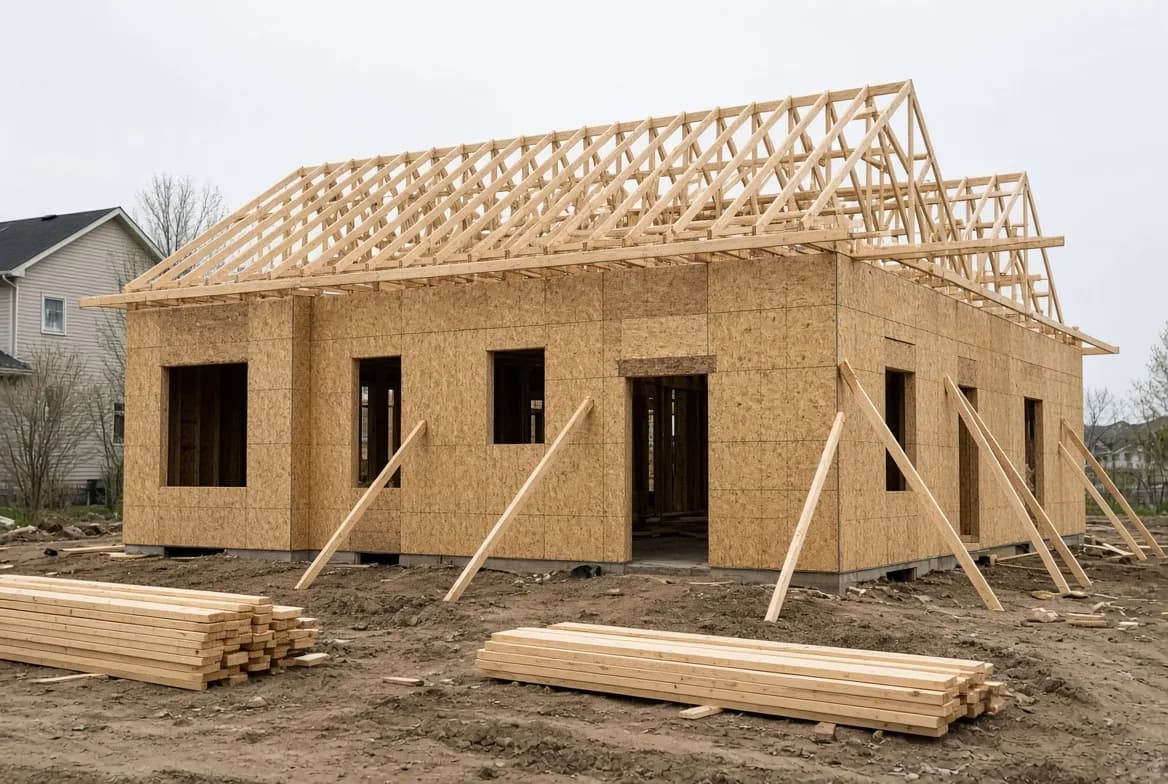
Builders say a house is built to code as though it settles the question of quality. What it says is that the house is legal. The code is a floor, negotiated to be achievable everywhere by everyone, and a house sitting exactly on that floor is the least house that could lawfully have been built.
None of that is a criticism of the code. Setting a minimum is what it is for, and the minimum has risen a great deal over the decades. But it explains why two code-compliant houses can feel completely different to live in, and why the phrase built to code answers a legal question rather than a quality one.
What the code is aiming at#
The objectives are safety, health, accessibility and, more recently, energy. Comfort is barely in scope. Durability is in scope only where a failure becomes a safety or health problem. Noise between rooms, how a floor feels underfoot, whether the house is pleasant in August, and how long the finishes last are largely outside it. None of those are oversights. They are simply not what the document was written to control.
| Item | What code delivers | What exceeding it buys |
|---|---|---|
| Insulation | A minimum effective value for the climate zone | Lower bills, warmer surfaces, fewer cold spots |
| Airtightness | Increasingly tested, still a modest bar | Comfort, durability, and the biggest single energy win |
| Windows | A minimum performance rating | Less condensation, less draught, quieter rooms |
| Sound between rooms | Limited attention in houses | Bedrooms and bathrooms that feel private |
| Ventilation | A required rate and equipment | Better distribution and quieter fans |
| Water management | Flashing and drainage that shed water | Details that keep working after twenty winters |
| Structure | Adequate for design loads | Stiffer floors, fewer squeaks, less bounce |
Where exceeding the minimum pays#
Not everything is worth upgrading, and budgets are finite. The items that repay attention are the ones that are permanent, hidden, and expensive to revisit. A useful test is whether you could change it in ten years without demolition. If the answer is yes, it can wait until you have the money.
Air sealing first
It is the cheapest performance improvement available and it affects comfort, energy and durability at once. It is also the one that cannot be improved later without opening things up.
Water management details
Flashing, drainage planes and sill pans. Water is what destroys buildings, and these details are invisible, permanent and inexpensive at the time.
Envelope over equipment
A better envelope lets you install smaller mechanical equipment and keeps working with no maintenance for the life of the building. Equipment gets replaced several times.
Structure where you will feel it
Floor stiffness is a comfort item that the code addresses only for strength. Deeper joists or tighter spacing is cheap during framing.
Provisions for later
Conduit, blocking, a capped drain, panel space. None of them cost much now and all of them save opening walls.
Common questions#
- What should I put in the contract?
- Numbers rather than adjectives. Insulation values, window performance ratings, an airtightness target and who pays if it is missed. Premium and high quality are not enforceable terms.
- Will a better-built house appraise higher?
- Not reliably on the appraisal alone, since appraisers work from comparable sales. Lower operating costs and comfort are easier to demonstrate to a buyer than to a valuation model.
- Is there a certification for building above code?
- Several exist, covering energy and overall performance, and they bring third-party verification with them. They are one route. Specifying the individual items you care about and having them written into the contract is another.
- How much more does it cost?
- For the items behind the drywall, usually a small percentage of the build. The cost climbs when upgrades require different equipment or a different assembly, which is why deciding early matters more than spending more.
- Is a code-minimum house a badly built house?
- No. It is a legal, safe house. It is also the least house that could have been built for the money, and on the items above the extra cost of doing better is often small.
- How do I know what my builder is providing?
- Ask for the specification rather than the brochure. Insulation values, window ratings and airtightness targets are all numbers a builder can put in writing.
- Do upgrades pay for themselves?
- Some do on energy alone. Others buy comfort and durability, which do not show up on a bill. Air sealing and water detailing are the ones that pay in more than one way.
- Which upgrades are not worth it?
- Anything easy to change later. Finishes, fixtures and appliances can all be improved whenever you like, so they compete poorly against things buried in the walls.
Related notes
Ask your own code question
Canadian Codes answers questions like this one from national, provincial, territorial, and municipal sources, and cites the document, section, and page so you can check it yourself.
Try it free →