

Before You Buy a Heat Pump, Check Your Panel
September 3, 2026 · 5 min read · Reviewed September 2026
Applies to Homeowners in Canada replacing or supplementing fossil-fuel heating. Electrical work follows the Canadian Electrical Code as adopted and amended by your province. Service rules are set by your local utility.
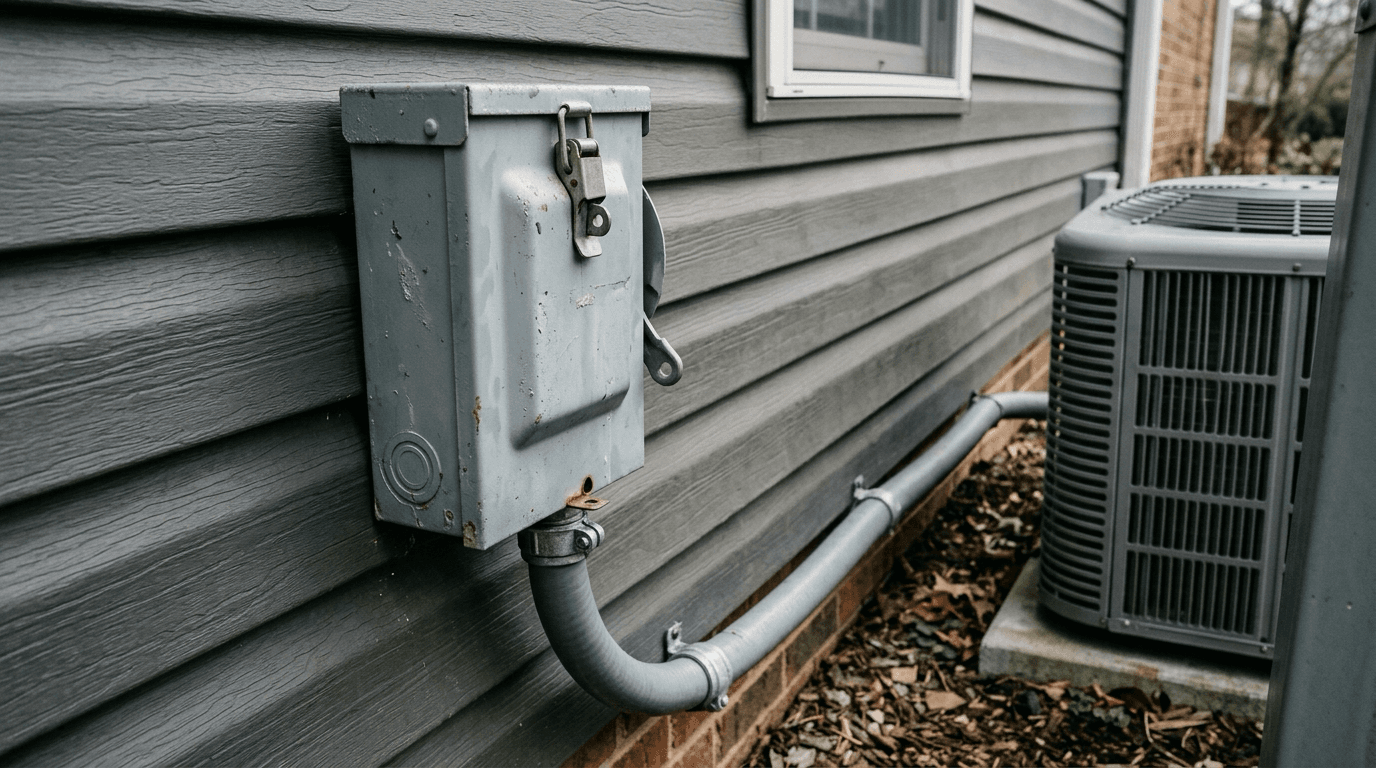
Heat pump quotes are usually accurate about the heat pump. What catches people is everything downstream of it. Does your panel have room. Does your service have capacity. And if it does not, does fixing that mean work on the utility side of the meter.
Those three questions have very different price tags and very different timelines. All three can be answered before you sign anything, and it costs almost nothing to ask.
Panel space vs. service size#
People say "I need a bigger panel" to describe two unrelated situations. Running out of breaker spaces is one. Running out of service capacity is the other. The first is often an afternoon of work. The second brings in your utility and can take months.
| Situation | What it means | Roughly what it involves |
|---|---|---|
| No free breaker spaces | Physical room in the box has run out | Tandem breakers where the panel allows them, a subpanel, or relocating circuits |
| Not enough service capacity | Total amperage coming into the house is too low | New conductors, meter base, possibly the utility drop or underground service |
| Both | The common case in older houses | A service upgrade, which replaces the panel anyway |
Only one thing tells you which of these you are in, and that is a load calculation.
The load calculation#
A load calculation adds up what the house can demand, applies the demand factors the electrical code allows, and compares the result against your service size. It is the document your electrical permit gets issued against, and it is what tells you whether the heat pump fits.
It is not a sum of every nameplate in the house. The code accepts that not everything runs at once and allows established demand factors for that. Houses that look overloaded on a napkin often are not, and a proper calculation sometimes rescues a project a rule of thumb had already written off.
Read your service size off the main breaker
The main breaker rating is what the house is served at. Note it, note how many spaces are free, and note whether the panel is listed for tandem breakers.
Settle the backup heat question first
Electric resistance backup, dual fuel keeping the existing furnace, or a cold-climate unit sized to carry the house on its own. This single decision often determines whether you need a service upgrade at all.
Get the load calculation before choosing equipment
Have it run against the heat pump you are considering and the backup strategy you picked. It is inexpensive, and everything after this depends on it.
Add anything else electric you expect within ten years
An EV charger, an induction range, an electric water heater. Sizing once for all of it is much cheaper than paying for panel work twice.
Call the utility early if a service upgrade is in play
Utility lead times are the long pole here and they sit outside your contractor’s control. Underground services, meter relocations and new drops can add months.
Confirm the permit and inspection path
Electrical permits are usually separate from building permits, and in several provinces they go through a separate electrical authority rather than the municipality.
What gets counted#
| Load | Why it matters here | Commonly overlooked |
|---|---|---|
| Existing service size | The ceiling everything else fits under | Read the main breaker, not the panel label |
| Heating and cooling | Usually the largest single addition | Backup electric heat is a separate and much bigger load |
| Range, dryer, water heater | Large fixed loads already in the calculation | A future electric water heater changes the answer |
| EV charger | Frequently the load that tips a service over | Plan it now even if you buy the car later |
| Load management devices | Can let two large loads share capacity | Acceptance varies by jurisdiction, so confirm before designing around one |
What to ask the installer#
Most heat pump quotes are written by the HVAC contractor, and the electrical work sits outside their scope. That is how the trades divide up, not sharp practice. But it does mean the number on the quote is often not the number you will pay, and the gap is not small.
Three questions close most of that gap. Ask whether a load calculation has been done and who did it. Ask what the quote assumes about your existing panel and service, in writing. And ask who is pulling the electrical permit, because if the answer is vague, nobody is.
Ask what the equipment is sized against, too. A unit sized for the coldest hour of the year runs badly the rest of the season, and one sized on a rule of thumb rather than a heat loss calculation tends to be oversized. Oversized equipment short cycles, which costs comfort and lifespan, and in an electric backup setup it can also drive the panel work you were trying to avoid.
Common questions#
- Do I always need a service upgrade for a heat pump?
- No, and assuming so is an expensive mistake. Plenty of houses fit one inside their existing service, particularly with a dual-fuel setup or a load management device. The load calculation settles it.
- Can I keep the gas furnace as backup?
- Yes, and in cold climates it is a common approach. The heat pump carries most of the season and the furnace takes the coldest days. It also avoids the large electric backup load that usually drives the service upgrade.
- What is a load management device?
- A device that stops two large loads from drawing at the same time so they can share capacity that would not support both at once. Whether it is accepted depends on your jurisdiction and the specific device.
- My panel is full but the service is fine. What are my options?
- Tandem breakers if the panel is listed for them, a subpanel fed from the existing service, or swapping the panel for one with more circuits at the same service size. All three are ordinary work and none of them involve the utility.
Looking for the number?
These pages state the requirement and name the document it comes from.
Related notes
Ask your own code question
Canadian Codes answers questions like this one from national, provincial, territorial, and municipal sources, and cites the document, section, and page so you can check it yourself.
Try it free →