

What a Final Inspection Verifies
April 10, 2025 · 4 min read · Reviewed September 2026
Applies to Permitted work across Canada. What a final covers, and what has to be complete before it is booked, is set locally.
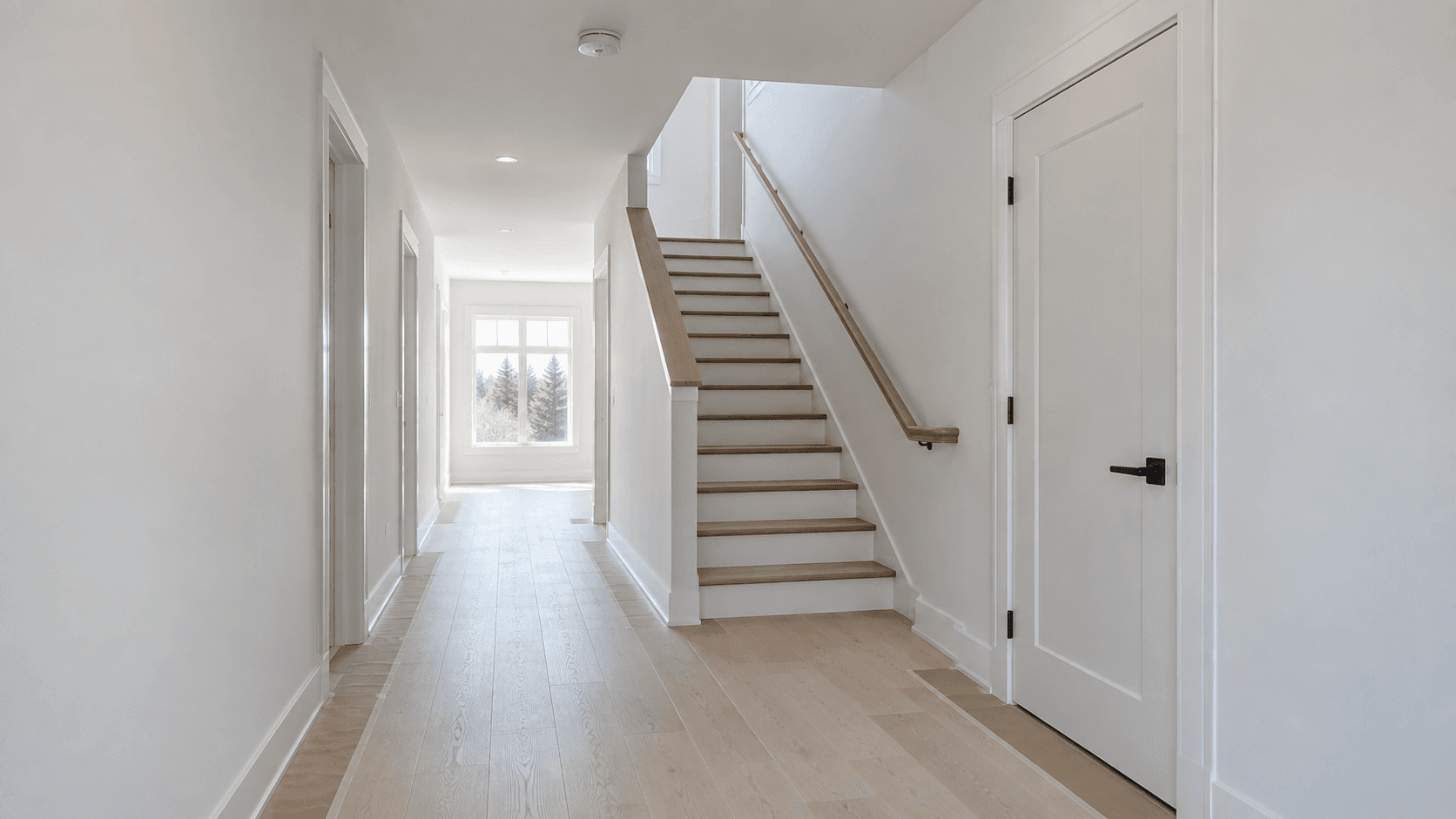
By the time a final inspection happens, most of what a building department cares about is hidden. Framing, wiring, plumbing and insulation were all checked at their own stages, and the final cannot revisit any of it.
What the final does is check the things that only exist once the job is finished, confirm nothing was skipped along the way, and close the permit.
That last part is the one people undervalue. A permit that never gets its final is an open permit, and an open permit attaches to the property rather than to whoever pulled it.
What gets checked#
| Item | Why it is a final-stage item | Common miss |
|---|---|---|
| Smoke and CO alarms | Devices are installed at the end | Interconnection not demonstrated |
| Guards and handrails | Installed after finishes | Graspable handrail left off a deck stair |
| Stair dimensions as finished | Floor coverings change the end risers | Bottom riser out of tolerance after tile |
| Egress windows operating | Hardware and trim are late items | Clear opening lost to a deep return |
| Door between garage and house | Hardware installed at the end | Self-closer removed or never fitted |
| Ventilation running | Commissioned late | Bathroom fan ducted into the attic |
| Address and access | Site work finishes last | Unit numbering, or a blocked exit route |
| Earlier inspections passed | The record is checked | A missed rough-in nobody noticed at the time |
| Site grading and drainage | Landscaping happens last | Water directed toward the foundation |
The stair one surprises people every time. A flight laid out correctly on subfloor gets tile at the bottom and hardwood at the top, and the first and last risers are now different from the others. It passed at framing and fails at final, and the fix is rebuilding the stair.
Occupancy and the final are not always the same event#
On many projects there are two milestones. An occupancy approval permits people to move in, and it focuses on life safety being complete and functional. The final closes the permit and can come later, once outstanding items are finished.
Conditional or temporary occupancy is common where the interior is complete and site work is not, particularly for winter completions where landscaping and grading have to wait for spring. Those approvals come with conditions and a date, and they are not the end of the process.
The trap is treating occupancy as completion. People move in, the outstanding items lose urgency, and the permit sits open for years until it surfaces during a sale.
Conditions attached to a temporary occupancy usually carry a deadline and sometimes a security deposit. Missing the deadline can mean forfeiting the deposit, and in some municipalities it means the occupancy approval itself lapses.
Check your own list before booking
Walk the job against the table above. A failed final costs a reinspection fee and a slot in the queue, and both are avoidable.
Confirm every earlier inspection is recorded
Missing sign-offs from a rough-in stage are found at the final, and by then the work is covered.
Test the alarms in front of yourself first
Interconnection is demonstrated by triggering one and hearing all of them. Discovering that they do not is better before the inspector is standing there.
Have the paperwork ready
Energy compliance documentation, engineered design letters, duct or airtightness test results, and any manufacturer instructions the inspector may want.
Get written confirmation the permit is closed
A verbal pass is not a record. You want the closed permit in the file, because that is what a buyer or an insurer will ask for.
Common questions#
- What happens if it fails?
- You get a list, fix the items and book a reinspection. Usually a fee and a delay rather than anything worse, unless the failure is structural.
- Can I move in before the final?
- Only with an occupancy approval where that is a separate step. Moving in without one is a real problem for insurance if something goes wrong.
- Does the inspector check the work of my contractor?
- Against the code, yes. Against your contract, no. Quality and finish are between you and the builder.
- What if the previous owner left a permit open?
- Call the municipality and ask what is outstanding. It is frequently a single inspection, and it is much easier to deal with outside a sale.
- How long is a permit valid?
- It varies, and permits commonly lapse if work stops for an extended period. Extensions are usually available if you ask before expiry.
- Do trade permits close separately?
- Yes. Electrical, plumbing and gas each need their own final. An open electrical permit is as much of a problem as an open building permit.
Related notes
Ask your own code question
Canadian Codes answers questions like this one from national, provincial, territorial, and municipal sources, and cites the document, section, and page so you can check it yourself.
Try it free →